Buying your first car is an exciting experience. However, purchasing a second-hand car requires careful inspection, proper document verification and a little research before making the final payment.
A car may look attractive in photographs, have a clean interior and come with an affordable price. But hidden mechanical problems, previous accident repairs, incomplete documents or unexpected maintenance expenses can turn an exciting purchase into a costly experience.
Whether you are planning to buy a used car in Dehradun, Haridwar, Rishikesh or anywhere in Uttarakhand, having a proper inspection checklist can help you make a more informed decision.
In this guide, CARSYZ brings you a complete used-car inspection checklist covering the important things every first-time buyer should check before purchasing a second-hand vehicle.
1. Check the Car’s Exterior Condition
Start by inspecting the vehicle from outside in good lighting.
Check the following:
- Scratches, dents and visible damage.
- Differences in paint colour between panels.
- Uneven gaps between doors, bonnet and boot.
- Rust or corrosion on visible body sections.
- Cracks in headlights and tail lamps.
- Condition of front and rear bumpers.
- Signs of previous body repairs.
Look carefully at the bonnet, doors, roof, fenders and boot.
Different paint shades or panel gaps may indicate previous repairs or replacement, but they are not proof of accident damage.
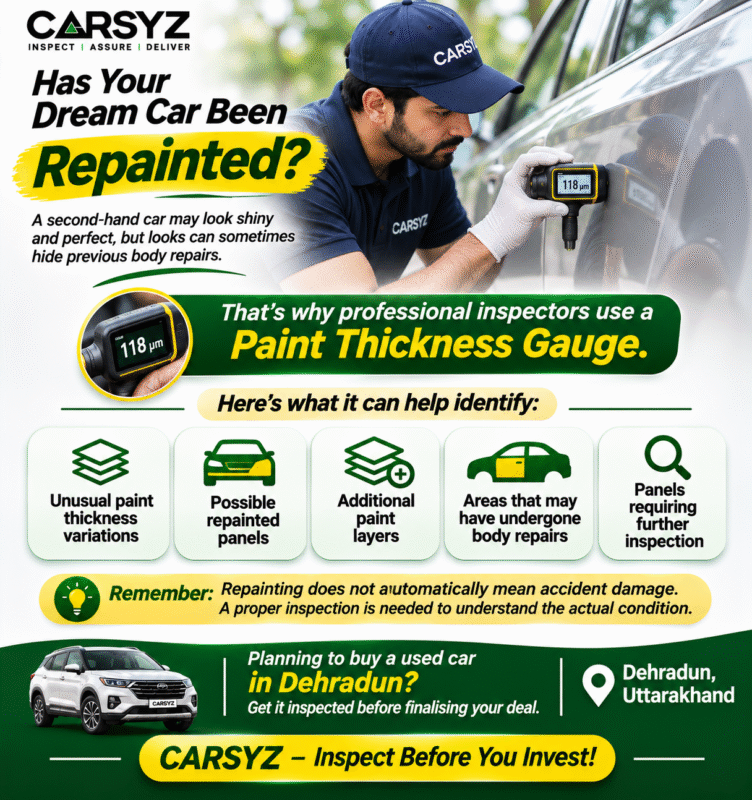
2. Check Original Paint and Repainted Panels
Previous repainting is an important point to investigate when buying a used car.
Look for:
- Paint colour differences.
- Uneven paint texture.
- Overspray around rubber seals.
- Paint marks on trim or adjoining panels.
- Visible body filler or repair signs.
A paint thickness gauge can help identify unusual coating variations on compatible metal panels.
However, readings vary by material and manufacturer. A higher reading does not automatically prove accident damage.
3. Inspect the Engine Condition
The engine is one of the most important components of a car.
Before buying, check:
- Visible engine oil leakage.
- Oil level and condition.
- Coolant level, following the manufacturer’s procedure.
- Damaged hoses and wiring.
- Unusual engine noises.
- Excessive vibration.
- Exhaust smoke.
- Engine warning lights.
If possible, observe the vehicle during a cold start.
Blue smoke, persistent white smoke or black smoke may indicate different engine or combustion-related concerns. The actual cause requires professional diagnosis.
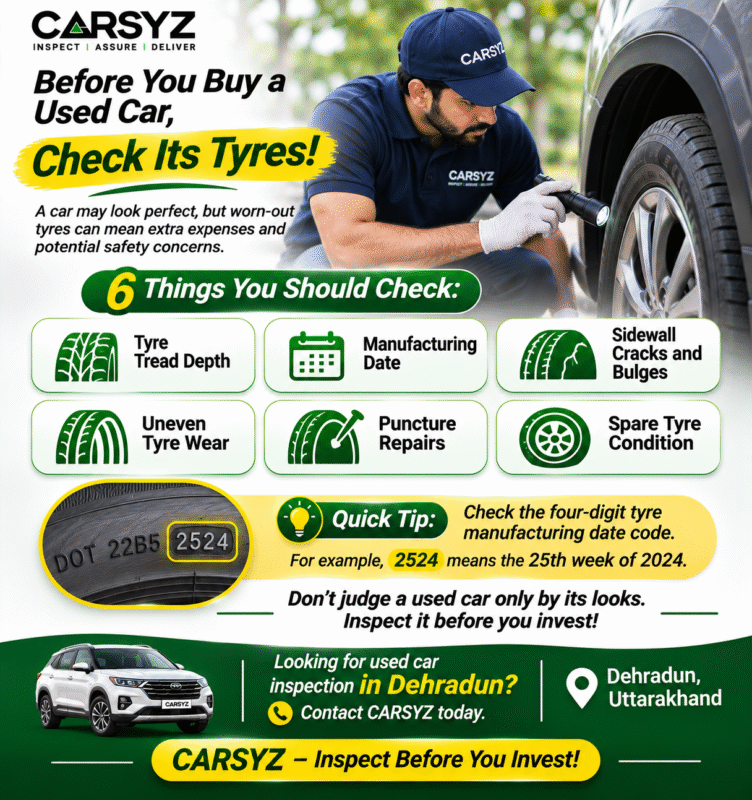
4. Check the Tyre Condition
Tyres directly affect vehicle handling, grip and braking performance.
Inspect all four tyres for:
- Tread depth.
- Uneven tyre wear.
- Sidewall cracks.
- Bulges or cuts.
- Puncture repairs.
- Manufacturing date.
- Correct tyre size and specifications.
Also check the spare tyre or the manufacturer’s supplied repair kit.
A tyre with a visible bulge or serious sidewall damage should be treated as a significant safety concern.
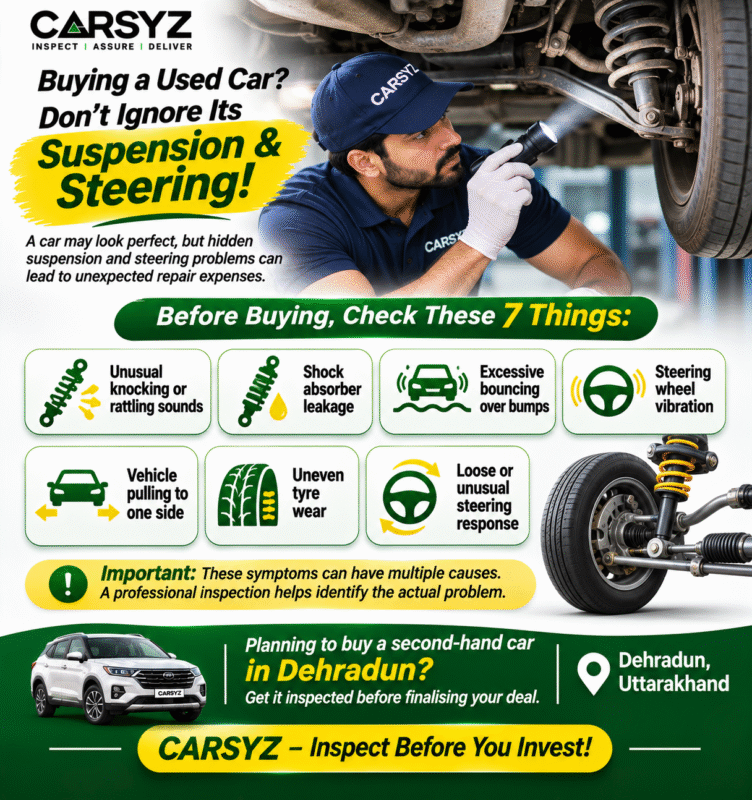
5. Inspect Suspension and Steering
Suspension and steering problems may not always be visible during a normal walkaround.
During a safe test drive, check for:
- Knocking sounds over bumps.
- Excessive bouncing.
- Steering vibration.
- Unusual steering effort.
- Vehicle pulling to one side.
- Unusual noises while turning.
Where suitable workshop equipment is available, inspect visible shock absorbers, suspension arms, bushes and steering components.
These symptoms can have multiple causes and should be assessed by a qualified technician.
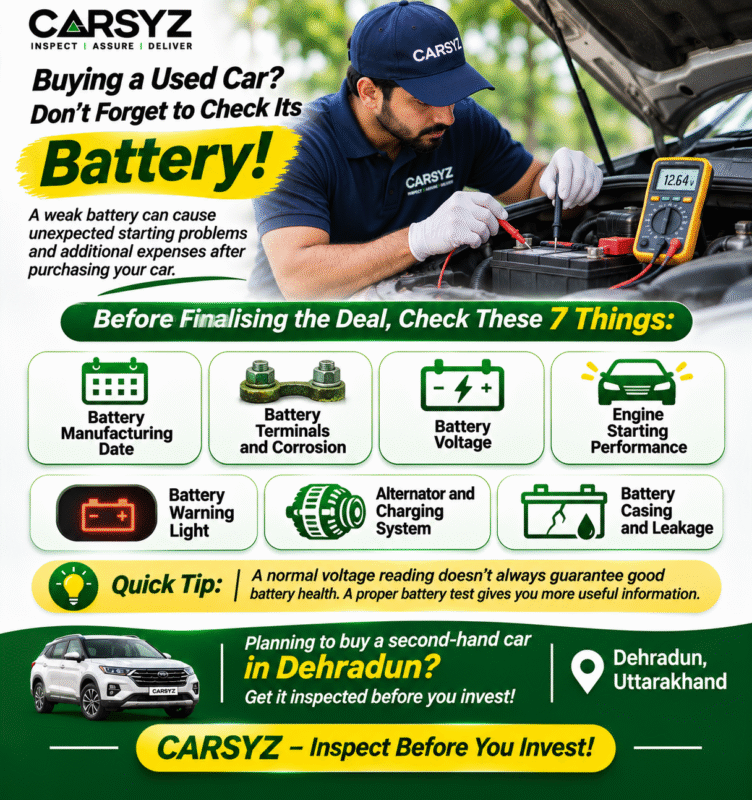
6. Check Battery and Electrical Systems
A weak battery or electrical problem can create unexpected expenses.
Inspect:
- Battery manufacturing date.
- Battery terminals.
- Corrosion around connections.
- Visible battery damage.
- Engine starting performance.
- Dashboard warning indicators.
- Headlights and tail lamps.
- Indicators and hazard lights.
- Power windows and central locking.
- Infotainment and other electrical controls.
A battery voltage reading alone does not establish complete battery health. A suitable battery and charging-system test may be needed.
7. Check the Interior Condition
The interior can provide clues about vehicle usage and maintenance.
Inspect:
- Driver’s seat condition.
- Steering wheel wear.
- Pedal condition.
- Dashboard cracks or damage.
- Seat belts and their operation.
- Door handles and switches.
- Roof lining.
- Floor mats and carpets.
- Air conditioning controls.
- Instrument cluster.
Compare the interior condition with the displayed odometer reading, but remember that interior wear alone cannot prove mileage tampering.
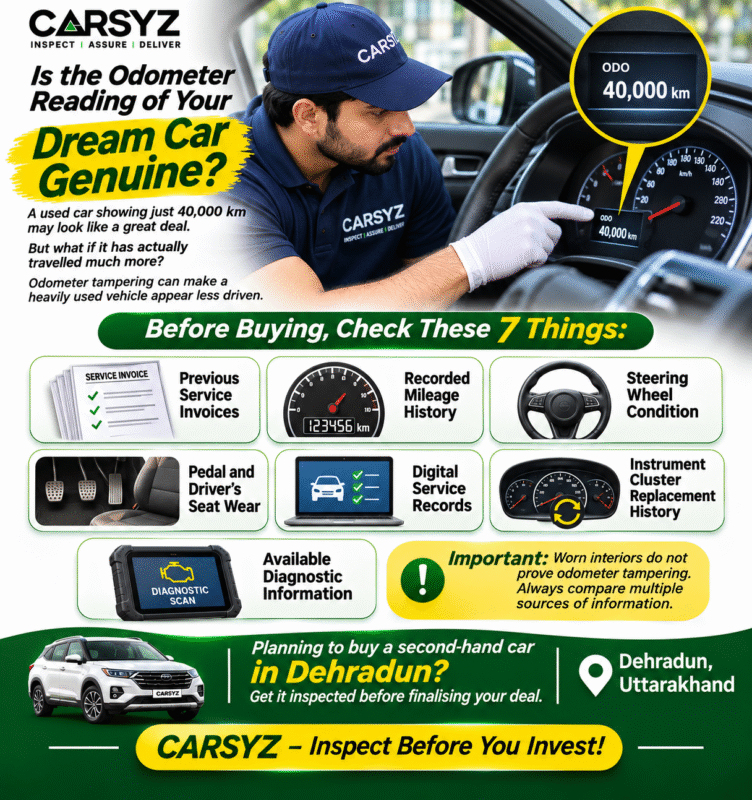
8. Verify Odometer Reading and Mileage History
Never rely only on the mileage displayed on the dashboard.
Compare the odometer reading with available:
- Previous service invoices.
- Authorised service records.
- Repair bills.
- Digital service history.
- Available diagnostic information.
Check whether the mileage readings progress consistently over time.
Unusual discrepancies require investigation. A diagnostic scan may provide additional information on compatible vehicles, but it cannot guarantee detection of odometer manipulation.
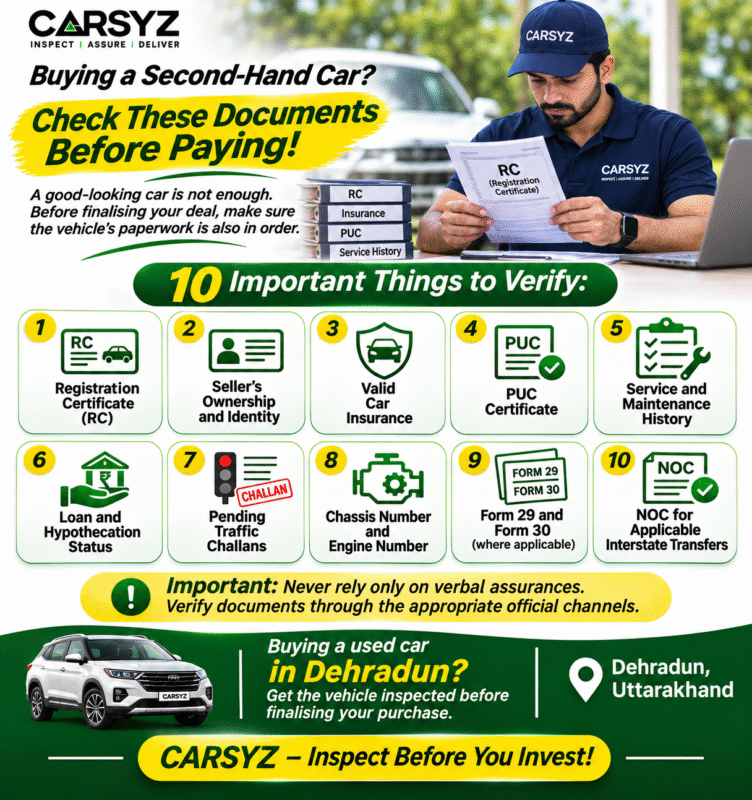
9. Check the Documents
Document verification is just as important as physical inspection.
Check these documents and details:
- Registration Certificate (RC).
- Seller’s identity and ownership.
- Insurance policy.
- PUC certificate, where applicable.
- Service and maintenance records.
- Loan and hypothecation status.
- Pending traffic challans.
- Chassis number and engine number.
- Required ownership transfer forms.
- NOC for applicable interstate transfers.
Verify vehicle information through official services such as VAHAN and Parivahan where available.
If a loan is associated with the vehicle, confirm its closure and the applicable hypothecation termination process before proceeding.
10. Check Air Conditioning and Other Controls
Air conditioning and electrical controls should not be ignored.
Check:
- AC cooling performance.
- Blower fan speeds.
- Air direction controls.
- Heater operation, where fitted.
- Front and rear defogger, where fitted.
- Power mirrors.
- Wipers and washers.
- Horn.
- Parking sensors and camera, where fitted.
Also check whether any electrical warning messages appear on the dashboard.
11. Check the Braking System
Brakes are critical for driving safety.
During a safe test drive, observe:
- Unusual brake noises.
- Steering vibration while braking.
- Excessive pedal travel.
- Unusual pedal feel.
- Vehicle pulling to one side during braking.
- Brake warning indicators.
A proper workshop inspection may be needed to assess brake pads, discs, drums, lines and other components.
Do not perform aggressive braking tests on public roads.
12. Take a Proper Test Drive
A test drive helps you understand how the vehicle performs under normal driving conditions.
Check:
- Engine starting and idling.
- Acceleration response.
- Gear shifting.
- Clutch operation, where applicable.
- Steering response.
- Braking behaviour.
- Suspension noises.
- Dashboard warning lights.
- Unusual vibration.
- AC performance.
Drive on a suitable route and follow traffic rules.
For automatic vehicles, observe whether gear changes feel consistent with the vehicle’s normal operation. For manual vehicles, check clutch engagement and gear shifting.
A short test drive cannot reveal every mechanical issue, so it should be combined with a physical inspection.
13. Check for Signs of Previous Accident Damage
Inspect the vehicle for evidence of previous repairs.
Look for:
- Uneven panel gaps.
- Repainted body panels.
- Visible repair marks.
- Damaged or replaced structural components.
- Irregular welds or joining points.
- Misaligned bonnet or boot.
- Unusual signs around pillars and roof sections.
A repaired bumper or repainted door does not automatically mean a major accident occurred.
If there are concerns involving structural components, seek an assessment from a qualified professional.
14. Ask About Ownership and Usage History
Before buying, ask the seller:
- How many previous owners has the vehicle had?
- Why is the vehicle being sold?
- Was it used for personal or commercial purposes?
- Has it undergone major repairs?
- Has it been involved in any reported accidents?
- Is the vehicle regularly serviced?
- Are there any known mechanical issues?
Verify the answers wherever possible through documents and inspection.
15. Estimate Additional Expenses Before Negotiating
A low purchase price does not always mean a good deal.
Consider potential expenses such as:
- Tyre replacement.
- Battery replacement.
- Insurance renewal.
- Scheduled servicing.
- Suspension repairs.
- Brake component replacement.
- Bodywork or paint repairs.
- Pending documentation or transfer requirements.
Get repair estimates from relevant professionals before negotiating.
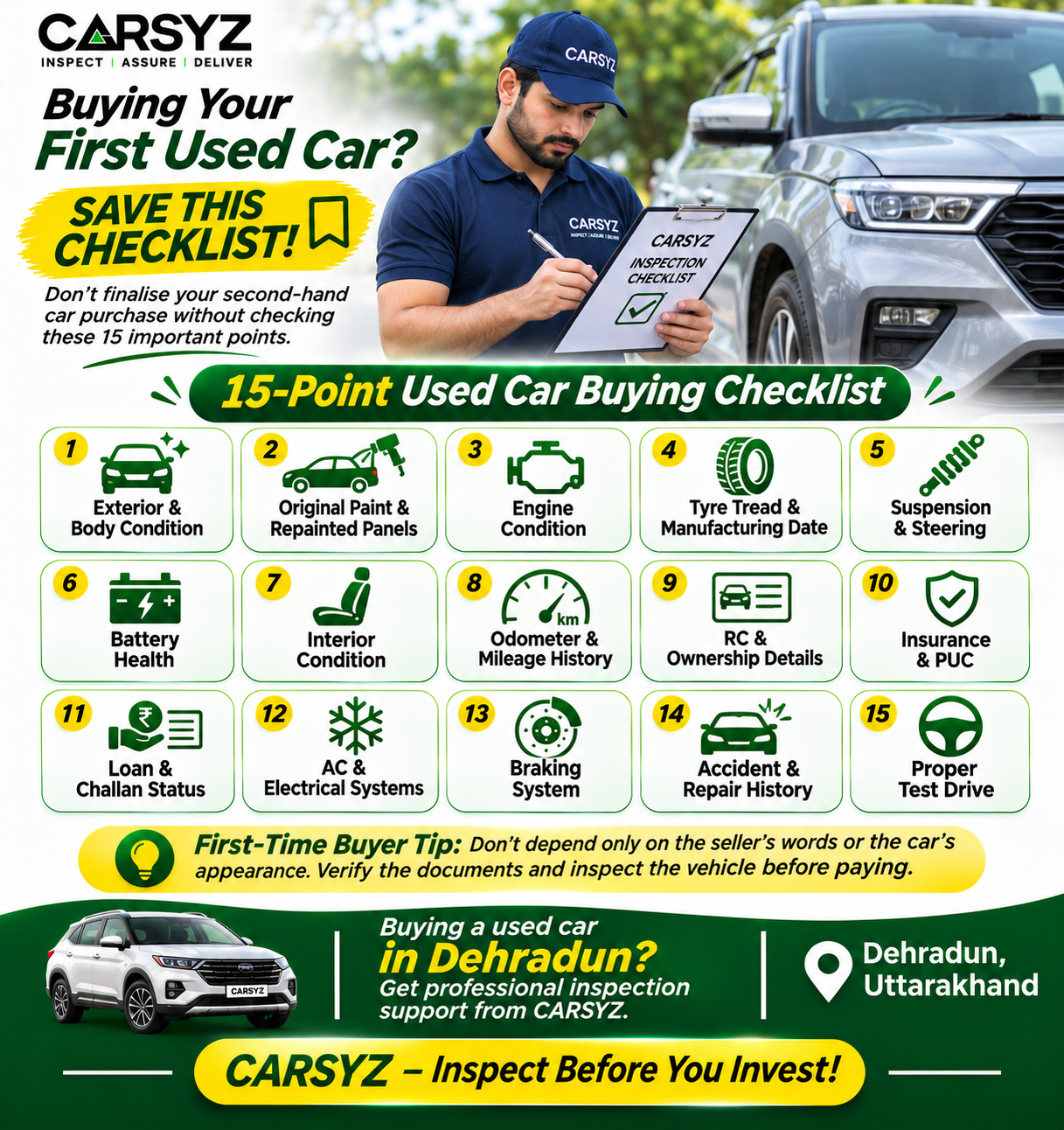
Complete Used Car Inspection Checklist – Quick Reference
Use this checklist before finalising your purchase.
Exterior and body
- ☐ Check scratches, dents and rust.
- ☐ Inspect paint differences and panel gaps.
- ☐ Check headlights, tail lamps and bumpers.
- ☐ Look for signs of previous body repairs.
Engine and mechanical
- ☐ Check engine oil and visible leakage.
- ☐ Observe cold-start behaviour.
- ☐ Listen for unusual engine sounds.
- ☐ Check exhaust smoke.
- ☐ Inspect coolant and visible hoses.
Tyres, suspension and brakes
- ☐ Check all four tyre conditions.
- ☐ Verify tyre size and manufacturing date.
- ☐ Look for uneven tyre wear.
- ☐ Listen for suspension noises.
- ☐ Observe steering and braking behaviour.
Interior and electrical
- ☐ Check seats, steering wheel and pedals.
- ☐ Test AC and electrical controls.
- ☐ Check battery and terminals.
- ☐ Observe dashboard warning lights.
- ☐ Check seat belts and safety equipment.
Documents and history
- ☐ Verify RC and registered owner.
- ☐ Check insurance and PUC validity.
- ☐ Review available service history.
- ☐ Verify loan and hypothecation status.
- ☐ Check available challan records.
- ☐ Match chassis and engine numbers.
- ☐ Confirm ownership transfer requirements.
Why Should First-Time Buyers Choose Professional Car Inspection?
A first-time buyer may not have the technical knowledge or equipment required to identify every vehicle-related issue.
A professional pre-purchase inspection can help assess the vehicle’s visible condition and relevant mechanical components within the agreed inspection scope.
It can also help identify areas that may require further investigation.
At CARSYZ, our aim is to help buyers make more informed used-car purchase decisions through vehicle inspection support.
If you are planning to purchase a second-hand car in Dehradun or nearby areas, consider arranging an inspection before finalising the deal.
Frequently Asked Questions
1. What should I check first when buying a used car?
Start with the vehicle’s exterior, engine condition, tyres, interior and documents. Then arrange a proper test drive and professional inspection.
2. Is a test drive enough before buying a second-hand car?
No. A test drive can reveal certain problems, but it cannot identify every hidden mechanical, structural or electrical issue.
3. How do I check whether a used car is accidental?
Look for repainting, unusual panel gaps, repair marks and possible structural damage. A professional assessment is recommended because cosmetic repairs alone do not prove a major accident.
4. How can I verify the mileage of a used car?
Compare the displayed odometer reading with available service records, invoices and compatible diagnostic information. No single method guarantees detection of odometer tampering.
5. Which documents are important when buying a used car in India?
Important documents include RC, insurance, PUC certificate, available service records, loan closure documents where applicable and required ownership transfer paperwork.
6. Should I buy a second-hand car with a repainted panel?
Not necessarily. Understand why it was repainted, inspect the repair quality and check whether any structural damage is present before making a decision.
7. Is professional used car inspection worth it?
It can help identify visible defects and potential concerns that a first-time buyer may overlook. It provides additional information to support your purchase decision.
Final Thoughts
Buying a used car is an important financial decision. Do not finalise the deal simply because the vehicle looks good or the seller offers an attractive price.
Use this checklist to inspect the exterior, engine, tyres, suspension, battery, interior, mileage and documents.
Most importantly, combine your own observations with professional vehicle inspection before making the final payment.
CARSYZ – Inspect Before You Invest!
Planning to buy a second-hand car in Dehradun or nearby areas? Contact CARSYZ to enquire about a professional pre-purchase vehicle inspection and make a more informed buying decision.