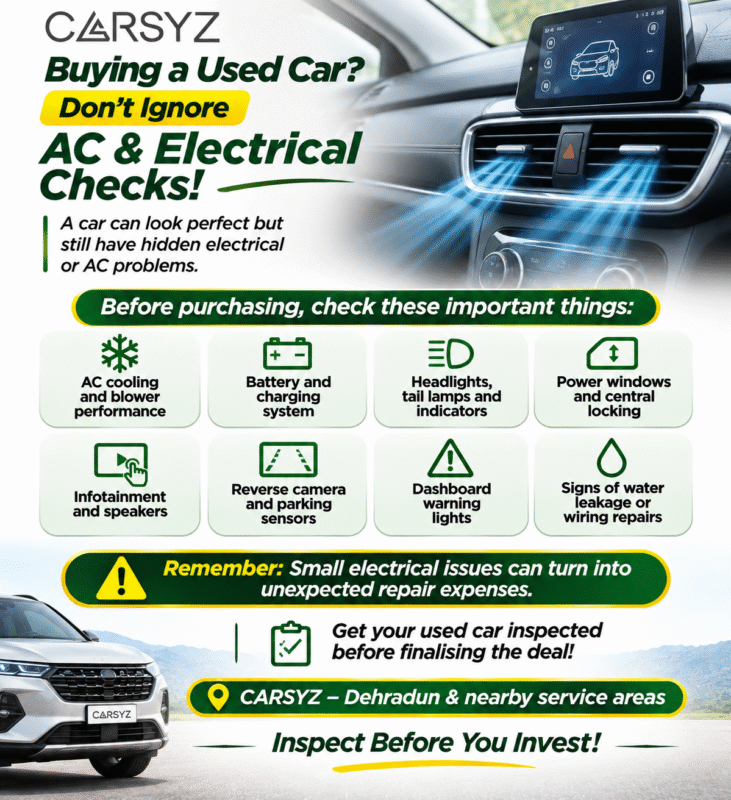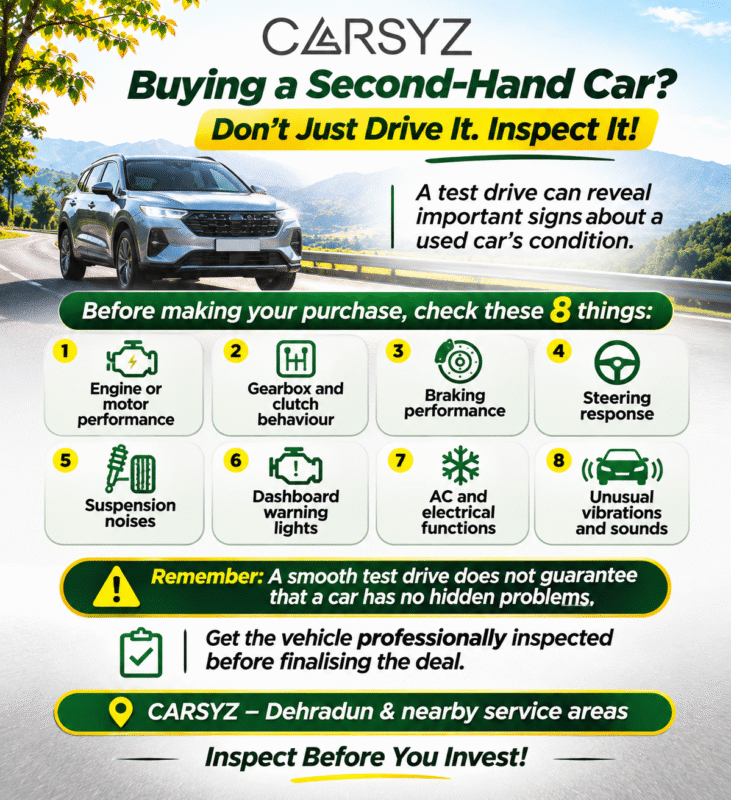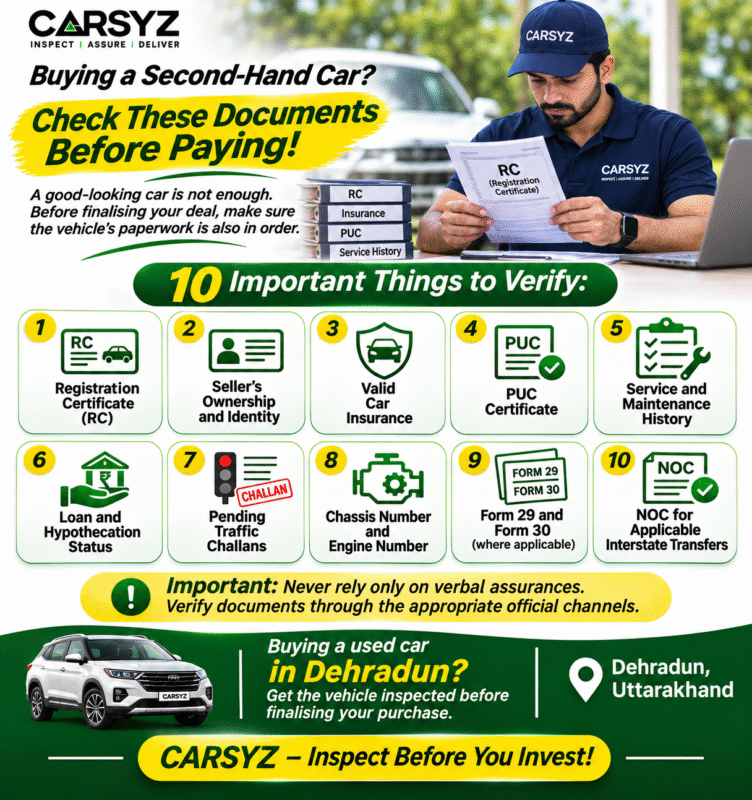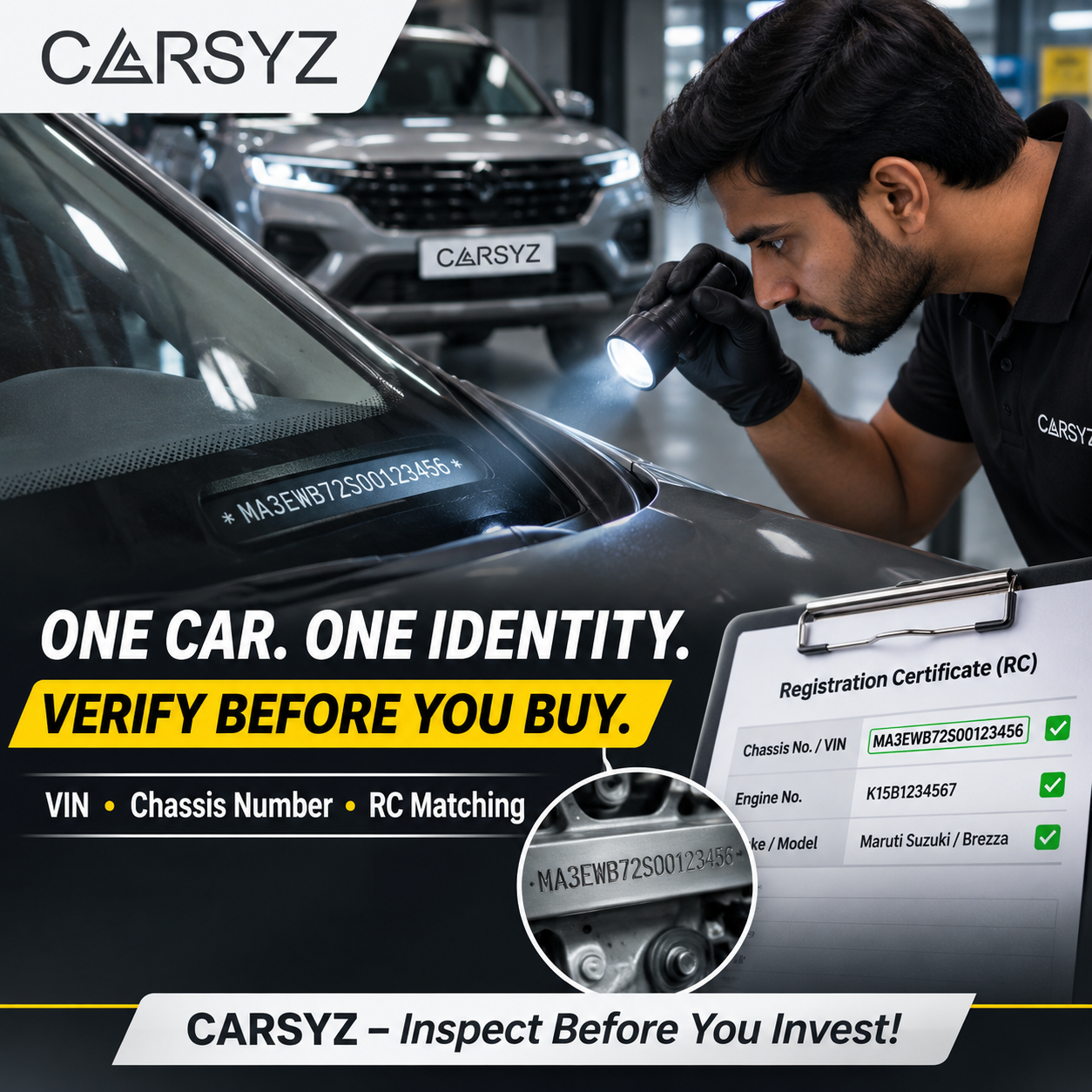
Buying a second-hand car involves more than checking its exterior, engine, tyres and interior. Before finalising the purchase, you should also verify the vehicle’s identity.
One of the most important details to check is the Vehicle Identification Number (VIN), commonly associated with the vehicle’s chassis number.
This number helps identify a specific vehicle and can be used to cross-check important details in its registration records and available manufacturer information.
If you are planning to buy a used car in Dehradun or anywhere in Uttarakhand, verifying the VIN and chassis number is an important step before making payment or completing ownership transfer.
In this guide, we explain what a VIN is, where to find it, how to compare it with vehicle documents and what warning signs buyers should look for.
1. What Is a VIN or Chassis Number?
VIN stands for Vehicle Identification Number.
It is a unique identification code assigned to a vehicle by its manufacturer. Many modern vehicles use a 17-character VIN containing letters and numbers.
The VIN helps identify details associated with a particular vehicle, such as its manufacturer and vehicle-specific identification information.
The term chassis number is also commonly used when referring to the vehicle identification marking. Depending on the vehicle and manufacturer, the physical stamping and identification labels may have different locations and formats.
Do not assume that every vehicle uses an identical VIN format. Older vehicles, imported vehicles and certain specialised vehicles may follow different identification conventions.
2. Why Is Chassis Number Verification Important?
Verifying the chassis number is important because it helps establish whether the physical vehicle corresponds with its available documents.
Before buying a used car, VIN verification can help you:
- Match the vehicle with its Registration Certificate (RC).
- Check whether identification details are consistent.
- Reduce the risk of purchasing a vehicle with suspicious identification markings.
- Confirm the correct vehicle when requesting manufacturer service information.
- Support insurance and ownership-document verification.
- Identify discrepancies that require clarification.
A matching VIN does not by itself prove clear ownership, absence of finance or a clean accident history. It is one important part of the overall verification process.
3. Where Can You Find the VIN or Chassis Number?
The location varies by manufacturer, model and year.
Common places to check include:
A. Windshield Area
Many modern vehicles display a VIN plate or identification marking near the lower corner of the windshield, visible from outside the car.
Look through the windshield and compare the displayed number with the available documents.
B. Driver-Side Door Frame
Some manufacturers place a vehicle identification label on the driver-side door frame or door pillar.
Open the driver’s door and check the manufacturer’s identification sticker or plate.
C. Engine Bay
The VIN or chassis identification may be located in the engine compartment, depending on the model.
Check the owner’s manual or ask an authorised service centre for the correct location.
D. Chassis or Body Stamping
Some vehicles have the chassis number physically stamped on a designated body or chassis location.
The location varies by vehicle design.
If the marking is difficult to access, ask a qualified technician or authorised service centre to help locate it.
Important: Never scrape, sand, alter or attempt to restamp a vehicle identification marking.
4. How to Verify the VIN with the RC
The Registration Certificate is an important document for checking vehicle identity.
Follow these steps:
Step 1: Locate the VIN on the vehicle
Find the identification number at the manufacturer’s designated location.
Step 2: Check the RC
Locate the chassis number or VIN recorded in the Registration Certificate.
Step 3: Compare the characters carefully
Compare the full sequence, including letters and numbers.
Do not overlook characters that may look similar, such as:
- 0 and O.
- 1 and I.
- 5 and S.
- 8 and B.
Use the manufacturer’s identification information to confirm the correct interpretation.
Step 4: Check the engine number where applicable
For petrol and diesel vehicles, compare the engine number recorded on the available documents with the vehicle’s identification details, where accessible.
Not every vehicle has the same engine-number recording arrangement.
Step 5: Investigate discrepancies
If any character does not match, do not ignore it. Ask the seller for clarification and verify the information through the registering authority or authorised manufacturer channel before proceeding.
5. How to Check VIN Details Through Official Sources
You can use appropriate official channels to verify available vehicle information.
In India, the VAHAN portal and relevant Parivahan services may provide registration-related information, depending on the service and access requirements.
Useful checks may include:
- Registration status.
- Vehicle make and model information.
- Registration details.
- Available vehicle records.
- Other information made accessible through the official service.
For manufacturer-specific information, an authorised dealer or service centre may be able to assist using the VIN.
The information displayed by online services may be limited. It should not be treated as a complete accident, ownership or maintenance history.
Use official government portals rather than relying on unknown websites asking for unnecessary personal or payment details.
6. Check for Signs of VIN Tampering
Identification markings should look consistent with the manufacturer’s original marking method.
Warning signs may include:
- Visible grinding or sanding around the stamped area.
- Unusual welding or cutting marks.
- Disturbed paint around the identification marking.
- Uneven or suspicious character alignment.
- Different fonts or character depths.
- Damaged or replaced identification plates.
- Mismatched VIN details across documents and vehicle markings.
These signs do not automatically establish tampering. Some vehicles may have legitimate repairs, replacement labels or manufacturer-authorised procedures.
However, any suspicious marking should be independently examined by an authorised service centre or competent authority before purchase.
Do not attempt to repair, clean aggressively or modify a suspicious identification marking yourself.
7. What If the VIN and RC Chassis Number Do Not Match?
A mismatch between the vehicle identification marking and registration documents should be treated seriously.
Possible explanations may include:
- Typographical or data-entry errors.
- Incorrect document records.
- Misread characters.
- Previous authorised repair or replacement procedures.
- A more serious vehicle identity concern.
Before purchasing:
- Ask the seller for a clear explanation.
- Obtain supporting documentation.
- Contact the authorised service centre if needed.
- Verify the registration records with the relevant RTO.
- Do not make final payment until the discrepancy is properly resolved.
If the explanation cannot be verified, reconsider the purchase.
8. Why Should You Check the VIN Before Buying a Used Car?
A VIN is useful for more than matching the vehicle with the RC.
It may help you request information related to:
Manufacturer Service Records
An authorised dealer may be able to check available service records associated with the vehicle, subject to manufacturer policy and data access.
Recall Information
The manufacturer may be able to confirm whether any applicable recall or service campaign remains outstanding.
Vehicle Specifications
VIN-based manufacturer information may help confirm vehicle details and certain original specifications.
Warranty Information
For vehicles with remaining manufacturer warranty, the VIN may help verify applicable warranty status and conditions.
Remember that available records depend on the manufacturer, vehicle age, service network and record-retention policies.
9. VIN Verification Is Not the Same as Complete Vehicle Inspection
A matching VIN is important, but it does not mean the vehicle is mechanically sound.
A vehicle may have consistent identification details and still have:
- Previous accident damage.
- Repainted panels.
- Engine or transmission concerns.
- Suspension problems.
- Electrical faults.
- Odometer discrepancies.
- Pending repairs.
That is why VIN verification should be combined with a physical vehicle inspection, document review and suitable diagnostic checks.
10. Used Car VIN Verification Checklist
Before finalising your purchase, use this checklist:
- Locate the manufacturer’s VIN or chassis marking.
- Check the VIN displayed near the windshield, if equipped.
- Check the door-frame identification label, if available.
- Locate the physical chassis stamping as specified by the manufacturer.
- Compare the full number with the RC.
- Check engine number details where applicable.
- Review registration information through appropriate official channels.
- Ask the manufacturer or authorised dealer about available vehicle records.
- Look for suspicious signs around identification markings.
- Investigate any mismatch before completing payment.
11. Why Include VIN Verification in a Professional Used Car Inspection?
A structured used-car assessment should consider both the vehicle’s physical condition and available identification details.
Depending on the inspection scope, the assessment may include:
- Checking accessible vehicle identification markings.
- Comparing identification details with documents provided.
- Recording the observed odometer reading.
- Noting visible concerns around identification areas.
- Highlighting discrepancies that need further verification.
However, a general vehicle inspection is not a legal certification of vehicle identity or ownership.
Any suspected tampering or unresolved mismatch should be referred to the relevant authorised service centre or government authority.
12. Used Car Inspection in Dehradun – CARSYZ
Planning to buy a second-hand car in Dehradun?
Do not focus only on the vehicle’s appearance and driving performance. Check its identification details and documents as part of the buying process.
CARSYZ offers used-car inspection services in Dehradun and nearby service areas to help buyers assess important aspects of a vehicle before purchase.
Depending on the vehicle and agreed inspection scope, the assessment may cover:
- Exterior and body condition.
- Paint and panel observations.
- Interior condition.
- Engine or motor-related observations.
- Transmission and driving observations.
- Tyres, brakes and suspension.
- Electrical features.
- Available diagnostic information.
- Relevant vehicle identification and document observations, where included in the agreed scope.
Contact CARSYZ to discuss your vehicle and confirm the inspection coverage before booking.
CARSYZ – Inspect Before You Invest!
Frequently Asked Questions
1. What is the difference between VIN and chassis number?
VIN means Vehicle Identification Number. It is the unique identification code assigned to a vehicle. Chassis number is a commonly used term for the vehicle’s identification marking, although terminology and formats can vary by vehicle.
2. Is the VIN mentioned on the RC?
The Registration Certificate generally records the vehicle’s chassis number or corresponding identification details. Compare the complete recorded number with the vehicle’s physical marking.
3. Where can I find the chassis number on a car?
Depending on the model, it may be visible near the windshield, on a door-frame label, in the engine bay or at a designated body or chassis stamping location.
4. Can I check a vehicle’s VIN online in India?
You can use appropriate official government services and manufacturer channels to check available vehicle information. Online information may be limited and may not provide a complete history.
5. What should I do if the chassis number does not match the RC?
Do not proceed with payment until the discrepancy has been explained and verified through the relevant RTO, authorised service centre or other appropriate authority.
6. Can VIN verification reveal accident history?
VIN verification alone cannot guarantee a complete accident history. It may help you request certain manufacturer records, but a physical inspection is also important.
7. Should I check the VIN before buying a second-hand car?
Yes. Compare the vehicle’s identification markings with the RC and available records before completing the purchase.
Conclusion
VIN and chassis-number verification are important steps when buying a second-hand car.
Always compare the vehicle’s identification markings with its documents, investigate discrepancies and use official channels when additional verification is required.
Most importantly, combine document verification with a proper physical inspection before making your final purchase decision.
Buying a used car in Dehradun? Get it inspected before you invest.
CARSYZ – Inspect Before You Invest!