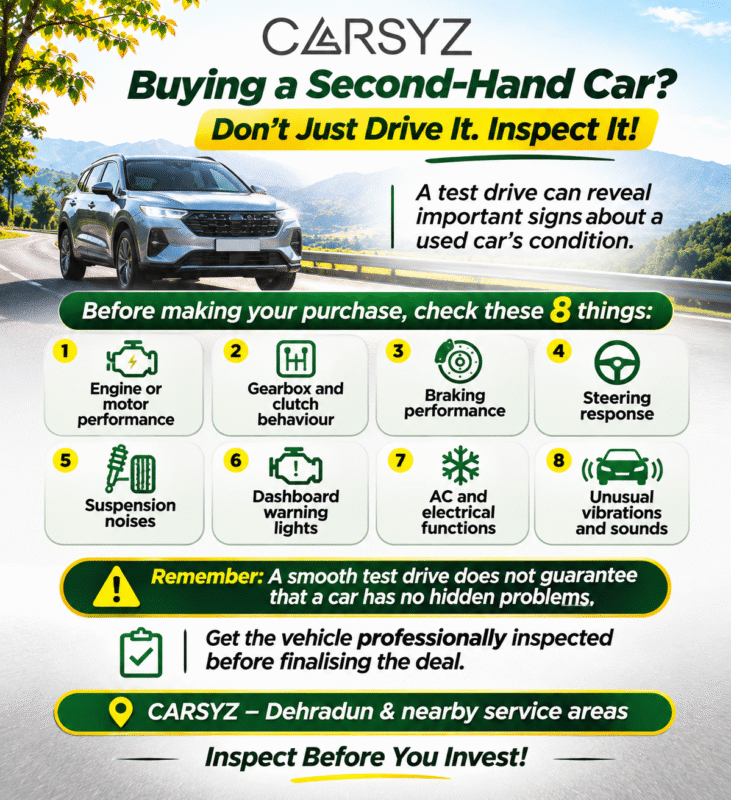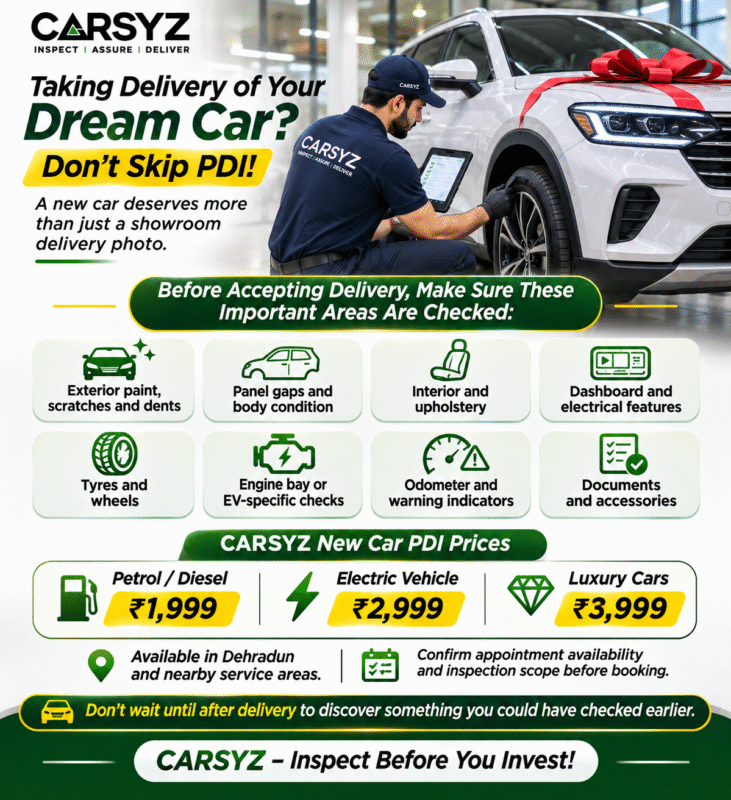
Buying a second-hand car can be exciting, but making the right purchase decision requires more than looking at photographs or taking a short test drive.
A vehicle may appear clean from the outside while having issues that are not immediately visible. These may include previous body repairs, mechanical concerns, electrical faults, tyre wear or incomplete maintenance records.
This is where a professional car inspection report becomes useful.
A car inspection report provides a structured record of the vehicle’s observed condition at the time of inspection. It helps buyers understand which areas have been checked, what observations were recorded and which concerns may require further attention.
If you are planning to buy a used car in Dehradun or nearby areas of Uttarakhand, this guide explains what a professional inspection report should include and how to understand its findings.
1. What Is a Professional Car Inspection Report?
A professional car inspection report is a document that records the observations made during a vehicle inspection.
It generally includes information about the vehicle, inspection date, inspection categories, observations and relevant photographs, depending on the service provider’s report format.
The purpose is to help the buyer understand the vehicle’s condition before making a purchase decision.
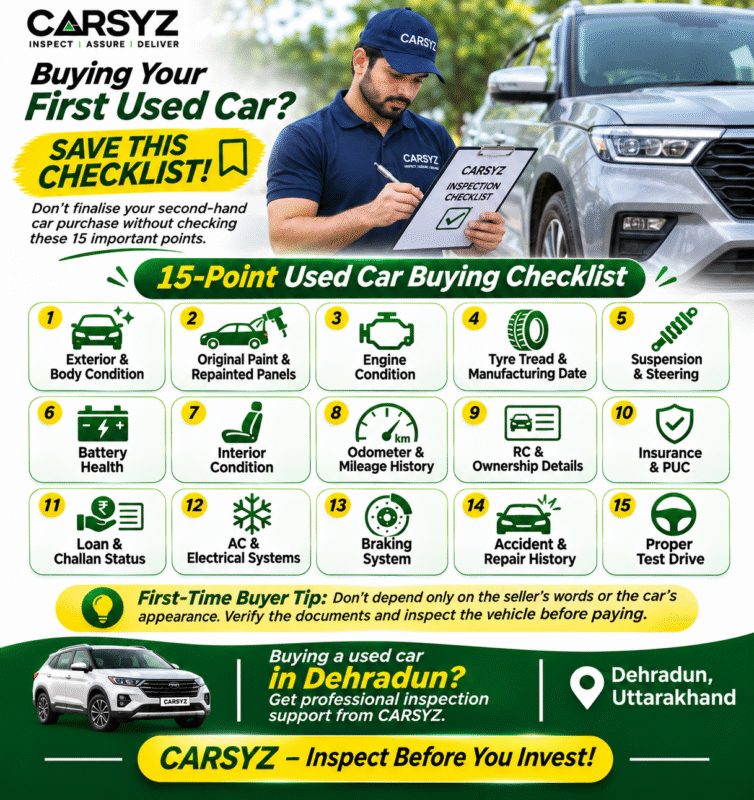
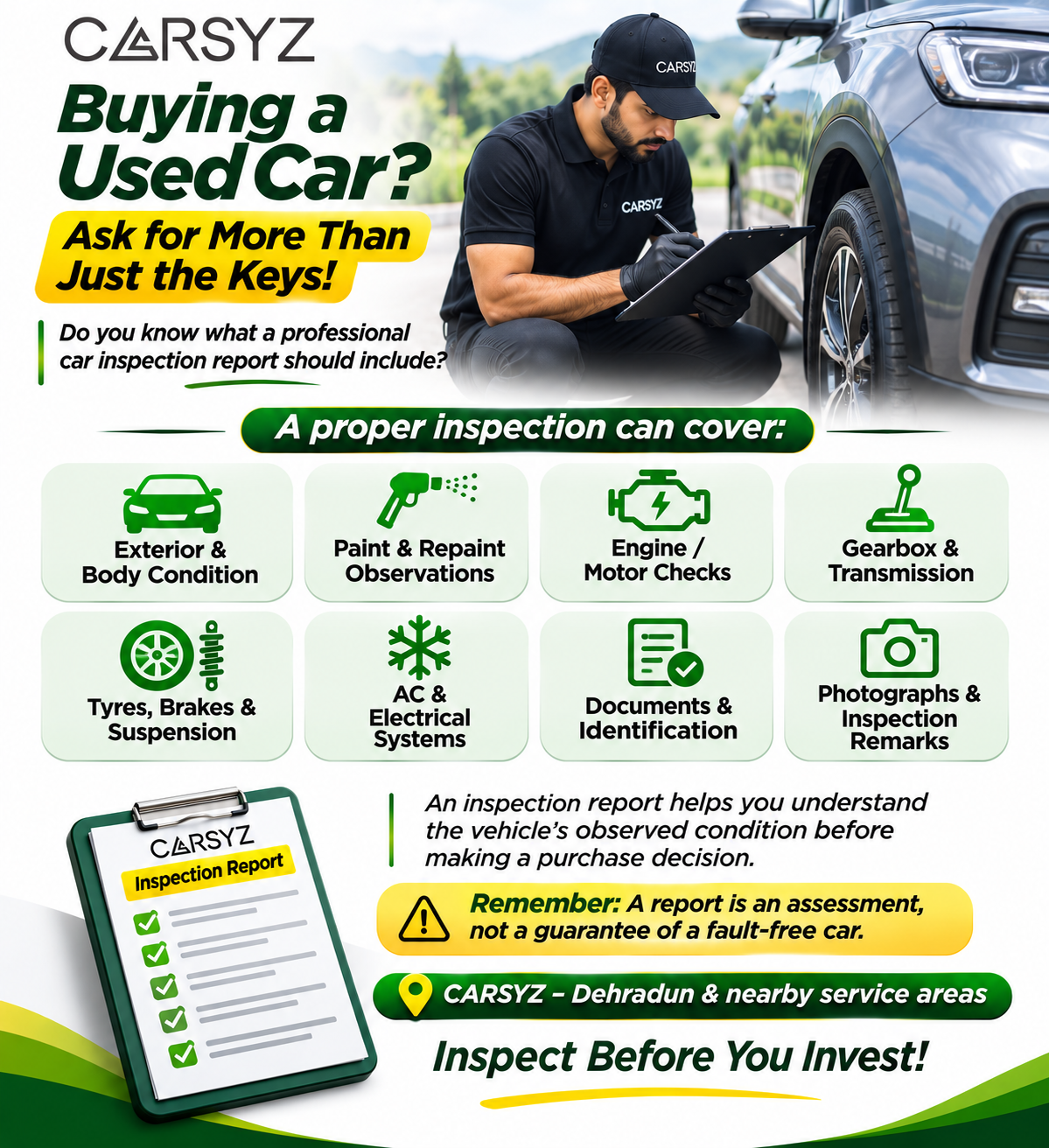
A report may cover:
- Vehicle identification details.
- Exterior and body condition.
- Paint and panel observations.
- Interior condition.
- Engine or motor-related checks.
- Transmission observations.
- Suspension and steering.
- Tyres and brakes.
- Electrical and electronic features.
- Available diagnostic information.
- Documents and visible identification details.
- Photographs and inspection remarks.
The exact coverage varies by vehicle type, inspection provider, available equipment and agreed inspection scope.
2. Vehicle Identification Details
A good inspection report should begin by identifying the vehicle being inspected.
This helps ensure that the report relates to the correct car.
Important details may include:
- Manufacturer and model.
- Variant.
- Registration number.
- Chassis number or VIN, where accessible.
- Fuel type.
- Transmission type.
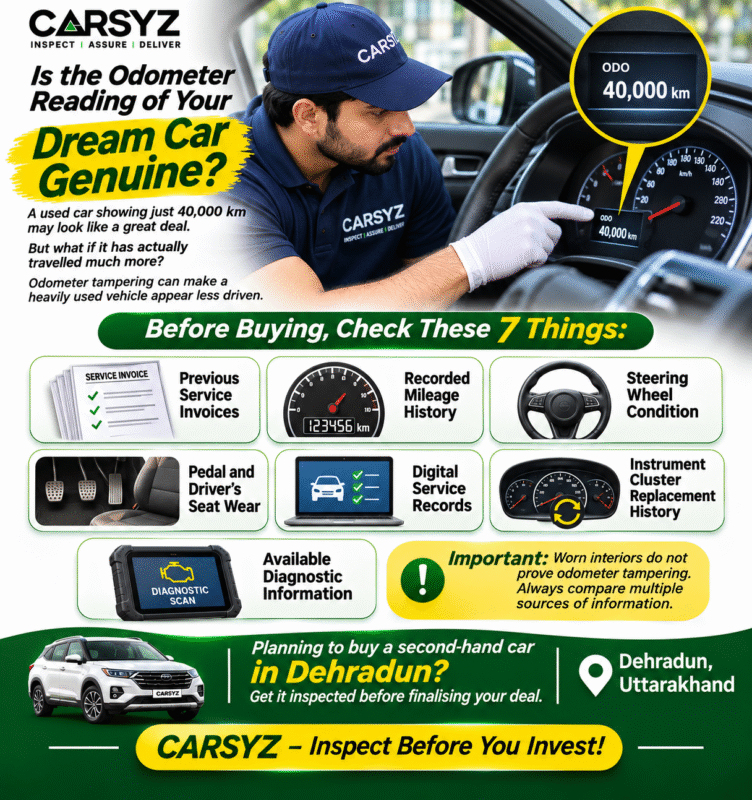
- Odometer reading at inspection.
- Inspection date and location.
The identification details should be compared with the available vehicle documents.
An odometer reading recorded during inspection is an observation at that particular time. It should not automatically be treated as proof of the vehicle’s complete mileage history.
3. Exterior and Body Inspection
The exterior is one of the first areas assessed during a used-car inspection.
A report may document:
- Scratches and dents.
- Bumper condition.
- Door condition.
- Bonnet and boot condition.
- Roof and pillar observations.
- Visible panel gaps.
- Windscreen and window glass condition.
- Headlight and tail-lamp condition.
- Exterior mirror condition.
- Visible signs of previous repair.
Photographs can help buyers understand the location and appearance of recorded damage.
It is important to remember that a scratch or repaint does not automatically indicate an accident. The nature and extent of any previous repair should be assessed in context.
4. Paint and Repaint Inspection
Paint inspection can help identify areas that may have undergone repainting or repair.
Depending on the vehicle’s materials and the equipment available, a paint thickness gauge may be used on compatible surfaces.
The report may record:
- Visible paint scratches.
- Colour mismatch.
- Paint finish differences.
- Repaint observations.
- Paint thickness readings, where measured.
- Areas requiring further assessment.
Paint readings vary by manufacturer, model, panel material and factory paint process. A high or low reading alone is not conclusive proof of accident damage.
Some materials, such as plastic panels, may not be suitable for measurement using standard magnetic or eddy-current gauges.
5. Engine or Motor Inspection
For petrol and diesel cars, the report may include observations about:
- Engine startup.
- Idling behaviour.
- Unusual noises.
- Visible fluid leakage.
- Accessible engine-bay components.
- Exhaust smoke observations.
- Dashboard warning indicators.
- Available diagnostic fault information.
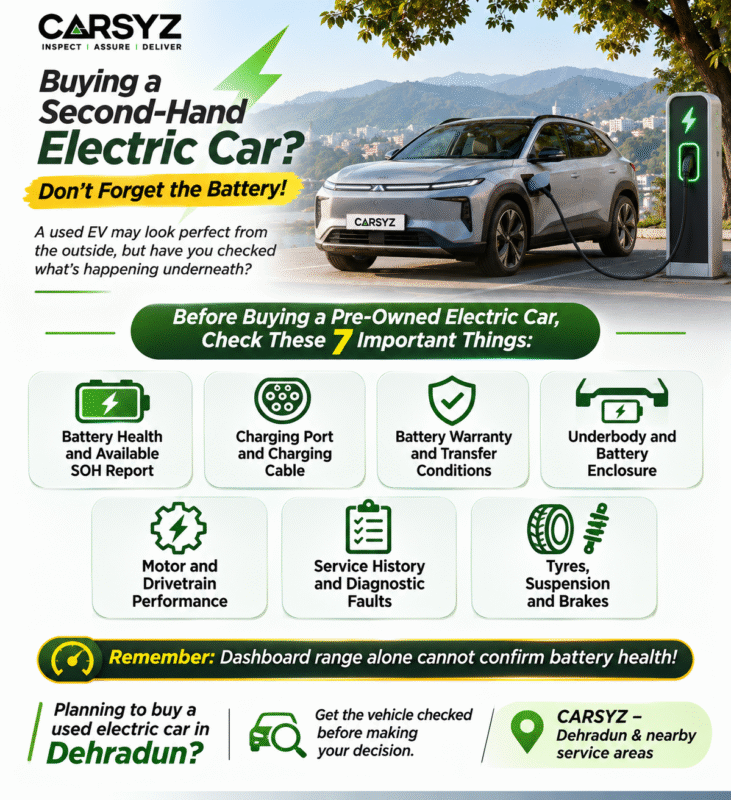
For electric vehicles, relevant observations may include:
- Motor operation.
- Charging-system condition.
- Available battery-related information.
- Warning indicators.
- Visible condition of accessible components.
A visual inspection or short test drive cannot confirm the complete internal condition of an engine or electric motor. Further mechanical diagnosis may be required if symptoms are identified.
6. Transmission and Gearbox Inspection
The transmission affects how the vehicle delivers power to the wheels.
Depending on the vehicle type, a report may document:
- Gear engagement.
- Clutch behaviour in manual vehicles.
- Unusual transmission noises.
- Jerking or hesitation.
- Delayed engagement.
- Transmission warning indicators.
- Driving observations during a test drive.
Different transmission systems, such as manual, AMT, CVT, DCT and torque-converter automatics, have different operating characteristics.
The inspection should assess behaviour according to the specific vehicle rather than applying the same expectations to every transmission type.
7. Suspension and Steering Inspection
Suspension and steering condition influence comfort, handling and road behaviour.
A report may include observations about:
- Steering response.
- Unusual steering noises.
- Visible suspension component condition.
- Clunking or knocking sounds.
- Excessive vibration.
- Vehicle stability during a test drive.
- Uneven tyre wear that may indicate an alignment or suspension concern.
Not every suspension component can be fully assessed through a visual inspection. Some concerns require a lift, specialist tools or workshop diagnosis.
8. Tyre and Brake Inspection
Tyres and brakes are essential safety-related areas.
A report may include:
Tyre observations
- Tread condition.
- Visible cuts or bulges.
- Uneven wear.
- Tyre size and specification.
- Manufacturing date, where checked.
- Spare wheel or repair kit condition, where applicable.
Brake observations
- Brake response during a test drive.
- Unusual noise.
- Pedal feel.
- Visible condition of accessible components.
- Warning indicators.
A basic inspection may not include precise brake-component measurements or dismantling. Any suspected safety issue should be assessed by a qualified workshop before the vehicle is driven further.
9. Interior Inspection
The interior can reveal signs of wear, neglect, damage or previous repairs.
The report may record:
- Seat and upholstery condition.
- Dashboard scratches or damage.
- Door trims.
- Roof lining.
- Floor carpets.
- Steering wheel condition.
- Centre console.
- Boot space.
- Odour or visible moisture.
- Seat adjustment operation, where equipped.
The interior condition should be considered alongside the vehicle’s age, mileage and maintenance history.
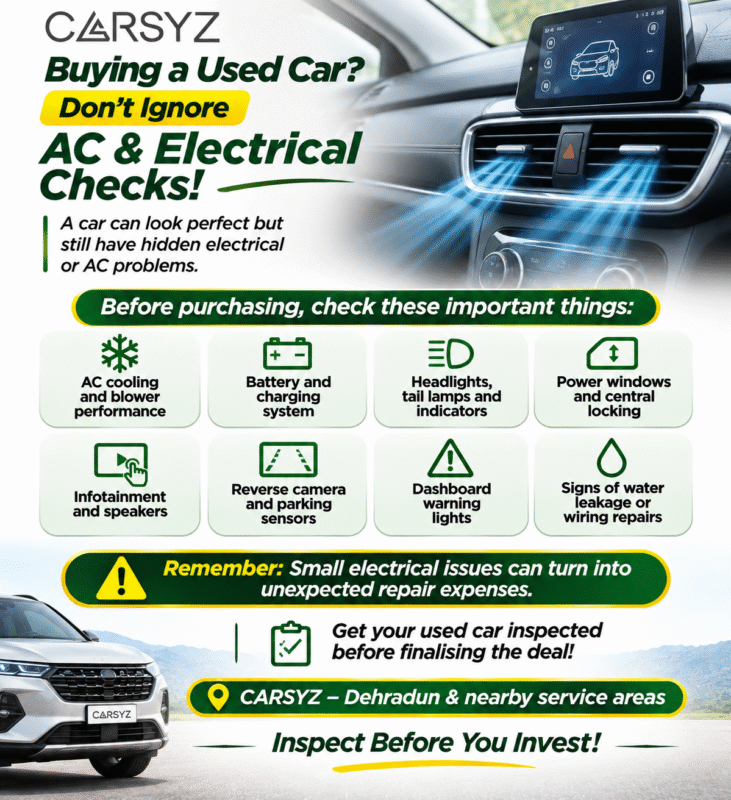
10. Electrical and Electronic System Inspection
Modern vehicles contain multiple electrical and electronic features.
Depending on the inspection scope, the report may cover:
- Headlights and indicators.
- Power windows.
- Central locking.
- Horn.
- Wipers and washers.
- Air conditioning.
- Infotainment system.
- Reverse camera.
- Parking sensors.
- Dashboard warning lights.
- Available diagnostic scan information.
A diagnostic scan can provide useful information, but its coverage depends on the vehicle and diagnostic equipment. It does not guarantee that every electrical or intermittent issue has been identified.
11. Air Conditioning Inspection
The AC system should be checked for basic operation and cooling performance.
A report may include observations about:
- Cooling performance.
- Blower speeds.
- Airflow modes.
- Unusual noises.
- Unusual odours.
- Available rear AC functions.
- AC-related warning indicators, if applicable.
A detailed refrigerant pressure test, leak test or component diagnosis may require separate workshop equipment and should not be assumed to be included in every inspection.
12. Vehicle Documents and Identification
A car’s documents should be reviewed alongside its physical condition.
A report or accompanying document review may cover:
- Registration Certificate (RC).
- Registration and vehicle identification details.
- Insurance validity.
- Pollution Under Control (PUC), where applicable.
- Chassis number and VIN consistency.
- Engine number, where applicable and accessible.
- Loan or hypothecation details.
- Available service records.
- Pending challans, where verified.
Document verification has its own limitations. A physical inspection report should not be treated as a legal guarantee of ownership, absence of finance or complete accident history.
Buyers should independently verify relevant information through appropriate official channels.
13. Photographs and Inspection Remarks
Photographs make an inspection report more useful because they help the buyer understand the observations.
Where available, photographs may show:
- Exterior scratches and dents.
- Damaged panels.
- Tyre condition.
- Interior defects.
- Visible leakage.
- Dashboard warning indicators.
- Other relevant observations.
Each photograph should be associated with a clear description or inspection category.
A photograph records what was visible at the time. It may not reveal the full cause or extent of a defect.
14. How to Understand an Inspection Report
An inspection report is useful only when the buyer understands what its observations mean.
Reports may use categories such as:
Good: No notable concern was observed within the checks performed.
Needs Attention: An issue or abnormal observation was recorded and may require repair, monitoring or further assessment.
Not Checked / Not Applicable: The item could not be checked within the agreed scope or does not apply to the vehicle.
The labels and grading system vary between providers. Always read the remarks and limitations rather than relying only on an overall score.
If the report identifies a major concern, ask for clarification and consider a specialist diagnosis before negotiating or purchasing the vehicle.
15. Does a Car Inspection Report Guarantee a Fault-Free Vehicle?
No. An inspection report reflects observations from a particular inspection session.
Some issues may be hidden, intermittent or impossible to identify without dismantling or specialist testing.
A report should not be interpreted as:
- A guarantee of future vehicle performance.
- A guarantee that no accident has ever occurred.
- A complete mechanical teardown.
- A guarantee of genuine odometer history.
- A legal ownership certificate.
- A promise that no repairs will be needed.
A transparent report should clearly mention what was checked and what was outside the inspection scope.
16. Why Choose CARSYZ for Used Car Inspection in Dehradun?
Before purchasing a second-hand vehicle, it is helpful to have its condition assessed through a structured inspection.
CARSYZ offers used-car inspection services in Dehradun and nearby service areas to help buyers make more informed vehicle purchase decisions.
Depending on the vehicle and agreed inspection scope, checks may include:
- Exterior and body condition.
- Paint and panel observations.
- Interior condition.
- Visible engine or motor-related observations.
- Transmission and driving observations.
- Tyres, brakes and suspension.
- Electrical features.
- Available diagnostic information.
- Relevant photographs and inspection remarks.
Contact CARSYZ to discuss your vehicle, confirm service availability and understand the inspection coverage before booking.
CARSYZ – Inspect Before You Invest!
Frequently Asked Questions
1. What does a professional car inspection report include?
It may include vehicle identification, exterior and interior condition, paint observations, engine or motor checks, transmission, suspension, tyres, brakes, electrical features, documents and inspection photographs.
2. Is a car inspection report useful before buying a used car?
Yes. It can help buyers understand the vehicle’s observed condition and identify concerns that may need further assessment before purchase.
3. Does an inspection report show accident history?
An inspection may identify visible signs of previous damage or repair. However, it cannot guarantee a complete history of every accident the vehicle may have experienced.
4. Does a professional inspection include an OBD scan?
That depends on the service provider, vehicle compatibility and agreed inspection scope. Ask whether a diagnostic scan is included before booking.
5. Does an inspection report include photographs?
Some inspection reports include photographs of visible defects and important observations. Confirm the report format with the inspection provider.
6. Can I negotiate the used-car price using an inspection report?
The report can help you discuss documented concerns with the seller. Repair estimates and final negotiation should consider the nature, severity and verification of each issue.
7. Where can I get a used car inspection report in Dehradun?
You can contact CARSYZ to enquire about used-car inspection services in Dehradun and nearby service areas. Confirm the inspection coverage and report format before booking.
Conclusion
A professional car inspection report helps turn a used-car purchase into a more informed decision.
It provides a structured view of the vehicle’s observed condition, highlights concerns and helps buyers understand which areas may need further investigation.
Before finalising a second-hand car purchase, review the inspection findings, verify documents and seek specialist advice wherever necessary.
Planning to buy a used car in Dehradun? Get it inspected before you invest.
CARSYZ – Inspect Before You Invest!