When buying a second-hand car, most people focus on the engine, exterior, interior and mileage. However, there are two important systems that should never be ignored: suspension and steering.
These systems play a major role in vehicle stability, handling, comfort and driving safety.
A car may look excellent from the outside, but worn suspension components or steering-related problems can result in unexpected repair expenses after purchase.
If you are planning to buy a used car in Dehradun, Haridwar, Rishikesh or anywhere in Uttarakhand, understanding basic suspension and steering checks can help you make a more informed decision.
In this guide, CARSYZ explains how to check a used car’s suspension and steering, identify common warning signs and understand when professional inspection is necessary.
1. Understand the Role of Suspension and Steering
Before inspecting a vehicle, it is important to understand what these systems do.
What does the suspension system do?
The suspension system connects the vehicle’s wheels to its body and helps manage movement caused by uneven road surfaces.
It contributes to:
- Driving comfort.
- Tyre contact with the road.
- Vehicle stability.
- Handling during turns.
- Managing bumps and road irregularities.
Common suspension components include shock absorbers, struts, springs, control arms, bushes, ball joints and stabiliser links.
What does the steering system do?
The steering system allows the driver to control the direction of the vehicle.
Depending on the vehicle, it may include:
- Steering wheel and steering column.
- Steering rack.
- Tie rods and tie-rod ends.
- Steering joints.
- Electric or hydraulic power steering components.
Problems in either system can affect the driving experience and may create safety concerns.
2. Listen for Unusual Suspension Noises
One of the easiest ways to identify possible suspension problems is to listen carefully while driving.
Pay attention when the car moves over speed breakers, potholes or uneven roads.
Common warning sounds include:
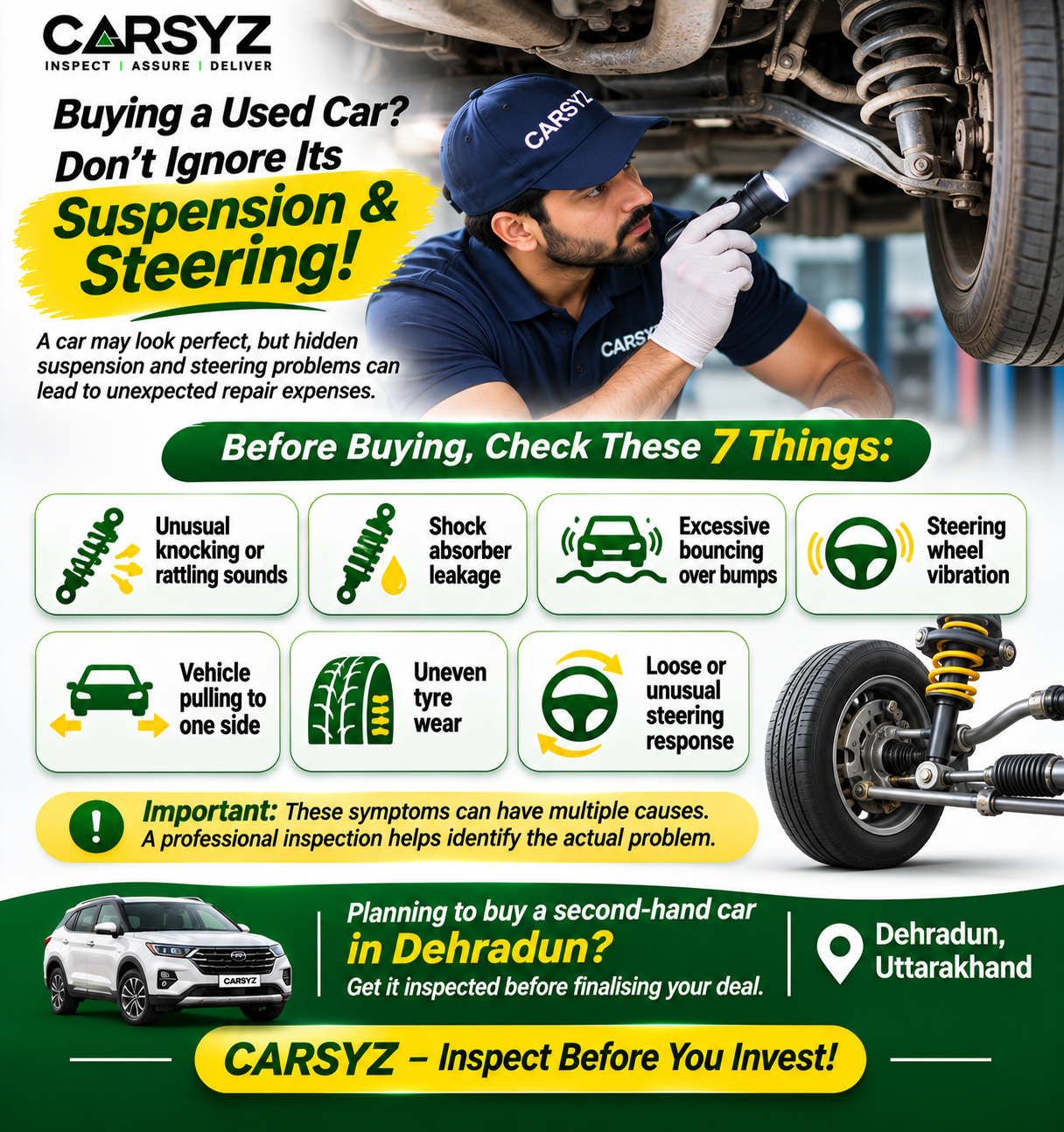
Clunking sounds: May indicate worn suspension bushes, ball joints, stabiliser links or other loose components.
Squeaking sounds: May be associated with worn rubber bushes or suspension components.
Rattling sounds: Could indicate loose parts or components that need further examination.
Repeated knocking sounds: May suggest worn or damaged suspension components.
However, not every noise comes from the suspension. Exhaust components, brakes and other parts can also produce similar sounds.
A qualified technician should identify the source.
3. Inspect the Shock Absorbers and Struts
Shock absorbers and struts help control the movement of the vehicle’s suspension.
Check the accessible areas for:
- Visible oil leakage.
- Physical damage.
- Corrosion.
- Damaged mounting points.
- Signs of poor previous repairs.
Oil around a shock absorber may indicate leakage, but dirt and road grime can sometimes make visual assessment difficult.
A professional inspection can help determine whether the component requires replacement.
4. Observe How the Car Behaves Over Uneven Roads
During a safe test drive, observe how the vehicle behaves over normal road irregularities.
Look for:
- Excessive bouncing after bumps.
- Unusual body movement.
- Repeated suspension noises.
- Instability over uneven surfaces.
- Noticeable pulling or handling irregularities.
A vehicle that feels unusually unstable should be inspected before purchase.
Avoid deliberately driving over large potholes or taking risks to test the suspension.
5. Check Steering Wheel Response
Steering response is another important part of a used-car inspection.
During a safe drive on a suitable road, observe whether the steering feels smooth and predictable.
Warning signs include:
- Excessive free play in the steering wheel.
- Difficulty turning.
- Unusual vibration.
- Steering that feels unusually heavy.
- Grinding or knocking noises while turning.
- Vehicle pulling to one side.
Some vehicles have different steering characteristics depending on their design, speed and power-steering system.
Therefore, unusual behaviour should be assessed against the vehicle manufacturer’s specifications.
6. Check for Uneven Tyre Wear
Tyres can provide useful clues about suspension and steering condition.
Inspect all four tyres for unusual wear patterns.
Examples include:
- Excessive wear on the inner edge.
- Excessive wear on the outer edge.
- Patchy or irregular tread wear.
- Different wear levels between tyres.
These patterns may be related to incorrect tyre pressure, wheel alignment, suspension wear or other factors.
Uneven tyre wear does not prove that the suspension is damaged, but it is a reason to investigate further.
7. Observe Whether the Car Pulls to One Side
If the vehicle consistently pulls towards one side on a reasonably level road, it may indicate an issue requiring attention.
Possible causes include:
- Incorrect wheel alignment.
- Unequal tyre pressure.
- Tyre-related problems.
- Brake-related issues.
- Suspension or steering component wear.
Test this only in safe conditions and without releasing control of the steering wheel.
A professional assessment is needed to determine the actual cause.
8. Check Steering Vibration
Steering vibration may occur at different speeds or while braking.
Possible causes include:
- Wheel imbalance.
- Tyre defects.
- Wheel alignment issues.
- Worn steering components.
- Suspension problems.
- Brake disc irregularities.
Pay attention to when the vibration occurs and whether it changes with speed or braking.
Do not assume that every steering vibration is caused by the suspension system.
9. Inspect the Vehicle’s Underside
A proper inspection from underneath can reveal problems that are difficult to notice from outside.
Where safe access and suitable equipment are available, check:
- Suspension arms.
- Bushes and joints.
- Shock absorbers.
- Springs.
- Steering rack area.
- Tie rods and related components.
- Visible damage, corrosion or leakage.
Never crawl under a vehicle supported only by a jack. Underside inspection should be carried out using suitable workshop equipment and safety procedures.
10. Why Professional Suspension and Steering Inspection Matters
A short test drive can reveal certain warning signs, but it cannot identify every worn or damaged component.
A professional vehicle inspection can help assess visible suspension and steering components, tyre wear, unusual noises and other relevant vehicle systems within the inspection scope.
If a concern is identified, further testing or a workshop-level diagnosis may be recommended.
For anyone purchasing a used car in Dehradun, a professional pre-purchase inspection can provide additional information before the final purchase decision.
Frequently Asked Questions
1. How do I know if a used car has suspension problems?
Look for unusual knocking sounds, excessive bouncing, visible shock absorber leakage, uneven tyre wear and unstable handling. These signs should be checked by a qualified technician.
2. What causes a knocking sound in car suspension?
Possible causes include worn bushes, ball joints, stabiliser links, suspension mounts or loose components. The exact cause requires inspection.
3. How can I check steering condition before buying a used car?
Observe steering smoothness, unusual vibration, excessive free play, difficulty turning and whether the vehicle pulls to one side. A professional inspection is recommended.
4. Does uneven tyre wear mean suspension damage?
Not necessarily. It may also be caused by incorrect tyre pressure, wheel alignment, wheel imbalance or driving conditions. Further assessment is required.
5. Is suspension repair expensive?
Repair costs vary depending on the vehicle, component, labour and extent of damage. Obtain a repair estimate before finalising your purchase.
6. Can I check suspension condition during a test drive?
A test drive can help identify unusual noises, excessive bouncing and handling concerns. However, some worn components require a physical inspection on suitable workshop equipment.
7. Should I buy a used car with steering problems?
Do not ignore steering-related concerns. Ask for a proper diagnosis and repair estimate before deciding whether to purchase the vehicle.
Final Thoughts
Suspension and steering are essential systems that influence how a vehicle handles and behaves on the road.
Before buying a second-hand car, listen for unusual sounds, observe steering response, inspect tyre wear and look for visible suspension damage.
Most importantly, do not make your purchase decision based only on appearance or a short test drive.
CARSYZ – Inspect Before You Invest!
Planning to buy a used car in Dehradun or nearby areas? Contact CARSYZ to enquire about professional pre-purchase vehicle inspection and make a more informed buying decision.