

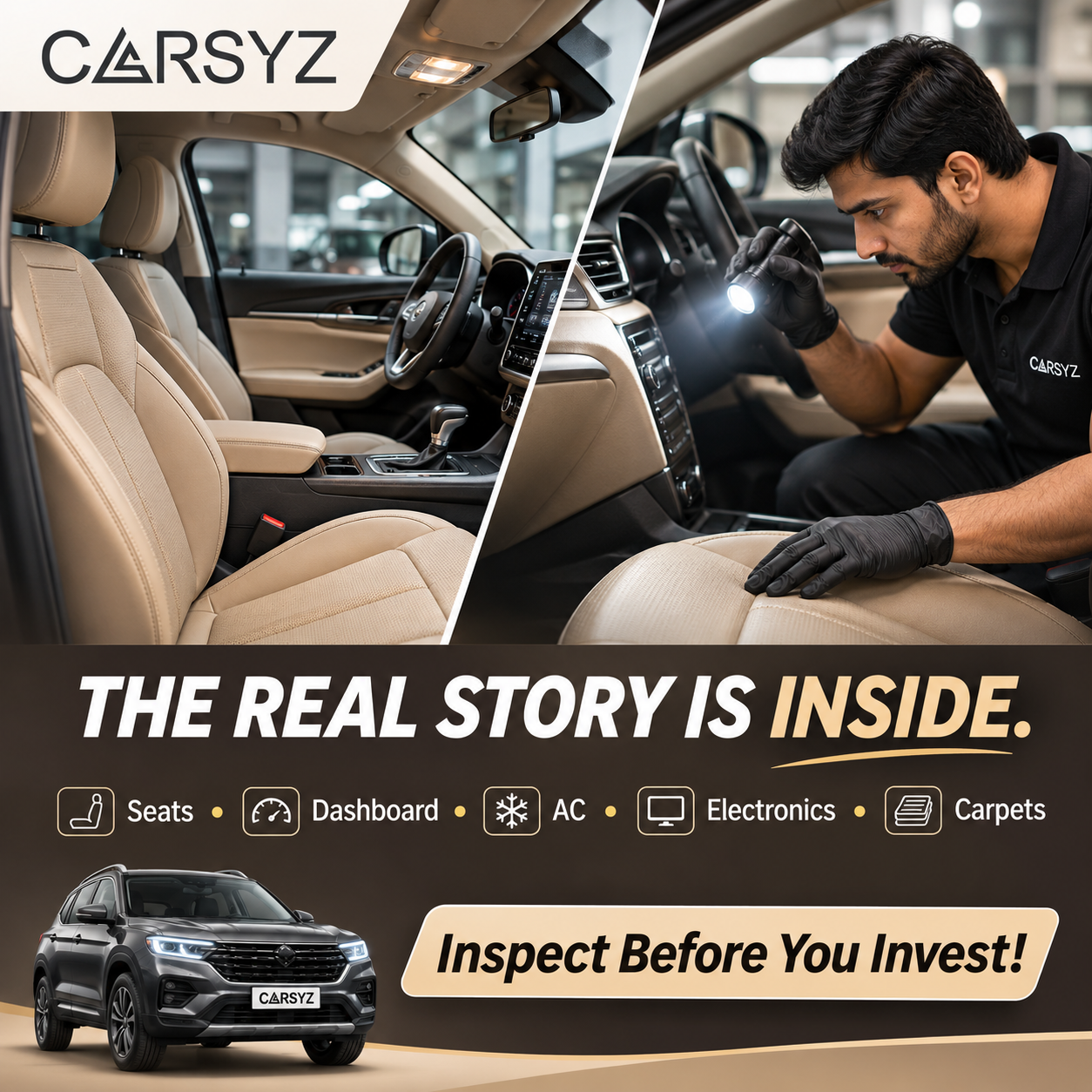
Buying a second-hand car is an important decision. While most buyers focus on the car’s exterior, paint condition, engine and price, the interior also deserves careful attention.
A car’s cabin can reveal useful clues about how it has been used and maintained. Worn-out seats, damaged controls, unusual smells, damp carpets or warning lights may indicate issues that deserve further investigation.
If you are planning to buy a used car in Dehradun or anywhere in Uttarakhand, use this practical interior inspection guide before finalising your purchase.
1. Check the seats and upholstery
Start by examining the front and rear seats.
Look for:
- Torn, cracked or heavily worn seat fabric or leather
- Loose stitching and damaged seat cushions
- Unusual stains or discolouration
- Uneven wear between the driver’s seat and other seats
- Damaged headrests or seat adjustment mechanisms
Heavy wear does not automatically mean a car has been driven extensively, but it is worth comparing the seat condition with the vehicle’s age, displayed kilometres and service history.
2. Inspect the dashboard and instrument cluster
The dashboard is one of the most important areas to check.
Look for:
- Cracks, fading or damage
- Loose or missing dashboard panels
- Non-working buttons and switches
- Unusual rattling sounds
- Warning lights on the instrument cluster
When the ignition is switched on, many warning lights should illuminate briefly as part of the vehicle’s self-check. Check the owner’s manual or ask a qualified technician about any warning light that remains on or behaves unexpectedly.
Do not assume that a dashboard with no visible warning lights is proof that the vehicle has no faults.
3. Check the odometer reading carefully
Note the displayed odometer reading and compare it with available records, such as:
- Service invoices
- Previous inspection records
- Workshop job cards
- Available vehicle history documents
Look for inconsistencies between the displayed kilometres and the vehicle’s overall condition.
For example, a heavily worn steering wheel, pedals or driver’s seat on a relatively low-kilometre vehicle may justify additional checks. However, these signs alone cannot establish odometer tampering.
A professional assessment and supporting records can help investigate discrepancies.
4. Test the air conditioning and ventilation
A comfortable cabin depends on a properly functioning AC system.
Check:
- Whether the AC starts and cools effectively
- Whether the blower works at different speed settings
- Whether air comes from the selected vents
- Whether temperature controls respond correctly
- Whether unusual smells come from the vents
- Whether the heating and defogging functions work, where equipped
Weak cooling, unusual noises or unpleasant smells may require further inspection. An interior check alone cannot identify the exact cause of an AC problem.
5. Test electrical features and controls
Do not limit your inspection to the engine and exterior. Test the electrical features inside the cabin.
Depending on the car’s equipment, check:
- Power windows
- Central locking
- ORVM adjustment and folding
- Steering-mounted controls
- Infotainment system
- Speakers
- USB and charging ports
- Interior lights
- Power seats
- Sunroof controls
- Rear camera and parking sensors
Test each feature individually. Some features may be optional or unavailable on particular variants, so compare them with the vehicle’s actual specification.
6. Inspect carpets, floor mats and signs of water ingress
Lift the floor mats and carefully inspect the carpet underneath.
Pay attention to:
- Damp or wet carpets
- Water stains
- Mud or unusual deposits
- Musty or persistent damp smells
- Corrosion on visible metal surfaces
- Signs of previous water accumulation
Also check the boot area, spare-wheel well and accessible cabin corners.
Water ingress can have several causes, including blocked drains, damaged seals or previous flooding. A damp carpet or musty smell is a reason for further investigation, not automatic proof that the car was flood-damaged.
7. Check seat belts and safety features
Safety equipment should never be overlooked.
Inspect:
- Seat belts for cuts, fraying or damage
- Whether belts extend and retract smoothly
- Buckles for proper locking and release
- Visible airbag covers for damage or unusual gaps
- Airbag warning-light behaviour during the ignition self-check
Do not dismantle airbag components or attempt to inspect their wiring yourself. If you notice a warning light, damaged trim around an airbag location or signs of previous repairs, arrange an assessment by a qualified technician.
8. Examine the steering wheel, pedals and gear selector
These frequently used controls can show signs of wear.
Check:
- Steering-wheel surface and buttons
- Pedal rubber condition
- Gear knob and gear-selector operation
- Handbrake or electronic parking-brake controls
- Clutch pedal feel in manual cars
Compare the wear with the car’s age and displayed mileage. Wear patterns are clues, not reliable mileage measurements by themselves.
9. Look for unusual smells inside the car
Take a moment to smell the cabin before and after switching on the AC.
Possible concerns include:
- Musty smells that may suggest moisture
- Persistent smoke or tobacco odour
- Strong chemical or cleaning-product smells
- Fuel-like smells
- Unusual smells from the ventilation system
A strong fragrance or freshly cleaned interior can make some odours harder to notice. If a smell persists, investigate its source instead of masking it.
10. Check the boot and luggage compartment
The boot is often missed during a quick inspection.
Check:
- Carpet and lining condition
- Spare wheel and tool kit, where supplied
- Signs of moisture or water stains
- Damaged or missing trim
- Boot-lid opening and closing
- Rear seat folding mechanism, if equipped
Also inspect the spare-wheel well for signs of water accumulation or corrosion.
11. Match the interior condition with the car’s history
A used car’s interior should be considered alongside its age, mileage, ownership and service records.
Ask the seller about:
- Previous interior repairs
- Seat-cover or upholstery replacement
- Dashboard or infotainment repairs
- Electrical issues
- Water leakage or flood exposure
- Warning lights or previous safety-system repairs
Where possible, verify important claims using invoices, service records or an appropriate professional inspection.
12. Why a professional used-car inspection matters
A visual interior check is useful, but it cannot confirm every mechanical, electrical or safety-related condition.
A professional used-car inspection can help assess the cabin alongside other important areas, including:
- Exterior and paint condition
- Engine and mechanical components
- Suspension and steering
- Tyres and brakes
- Electrical systems and available diagnostic information
- Documents and vehicle identification details
The inspection scope depends on the vehicle and the checks available. An inspection is an assessment of the vehicle’s condition at that time, not a guarantee of future performance.
Used Car Interior Inspection Checklist
Before finalising your purchase, review these points:
- ☐ Seats and upholstery
- ☐ Dashboard and instrument cluster
- ☐ Odometer reading and available records
- ☐ AC and ventilation
- ☐ Power windows and central locking
- ☐ Infotainment and other electrical controls
- ☐ Carpets and floor mats
- ☐ Signs of water ingress
- ☐ Seat belts and airbag warning light
- ☐ Steering wheel and pedals
- ☐ Gear selector and parking brake
- ☐ Unusual cabin smells
- ☐ Boot and spare-wheel compartment
Frequently Asked Questions
1. Why should I inspect the interior before buying a used car?
The interior can reveal wear, damage, electrical problems, moisture and possible inconsistencies with the vehicle’s age or displayed mileage. It helps you ask better questions before purchasing.
2. Can the interior condition reveal the actual kilometres driven?
Not reliably on its own. Seat, steering-wheel and pedal wear can provide clues, but they cannot confirm the actual mileage. Compare the odometer with service records and other available documents.
3. How can I identify possible water damage inside a car?
Check for damp carpets, musty smells, water stains, corrosion in visible areas and moisture in the boot or spare-wheel well. These signs need further investigation and do not independently prove flood damage.
4. Should I test all electrical features before buying?
Yes. Test the features fitted to that particular variant, including power windows, AC controls, infotainment, lights, central locking and other available equipment.
5. Is an interior inspection enough before buying a second-hand car?
No. The interior is only one part of the vehicle. You should also assess the engine, transmission, suspension, tyres, brakes, exterior, documents and vehicle identification details.
6. Where can I get a used car inspected in Dehradun?
You can contact CARSYZ to enquire about professional used-car inspection services in Dehradun. Confirm the available inspection scope, location and booking details before arranging the inspection.
Final Thoughts
A clean-looking cabin does not always mean a well-maintained car. Before buying a second-hand vehicle, take time to inspect its seats, dashboard, electrical features, AC, carpets, safety equipment and boot.
Most importantly, do not make your decision based only on appearance or the seller’s claims. Compare the interior condition with the vehicle’s age, mileage and available records, and arrange a professional inspection when needed.
Planning to buy a used car in Dehradun?
Contact CARSYZ for a professional used-car inspection enquiry before you finalise your purchase.
CARSYZ – Inspect Before You Invest!
Website: https://carsyz.com