

When buying a second-hand car, most people focus on the engine, exterior, interior and mileage. However, one important component often gets overlooked: the tyres.
Tyres directly affect braking, handling, road grip and overall driving safety. A used car may look well-maintained, but worn-out or damaged tyres can lead to additional expenses immediately after purchase.
If you are planning to buy a second-hand car in Dehradun, Haridwar, Rishikesh or anywhere in Uttarakhand, checking tyre condition should be an essential part of your pre-purchase inspection.
In this guide, CARSYZ explains how to check tyre tread depth, identify uneven tyre wear, read manufacturing dates and recognise signs that a tyre may need replacement.
1. Check the Tyre Tread Depth
Tyre tread is the patterned portion of the tyre that comes in contact with the road.
As tyres are used, the tread gradually wears down. Reduced tread can affect wet-road grip and increase the risk of losing traction.
Before buying a used car:
- Examine the tread pattern across the entire tyre.
- Look for areas where the tread appears excessively worn.
- Check whether the wear indicators are becoming level with the tread surface.
- Use a suitable tread-depth gauge for a more accurate measurement.
For passenger car tyres, 1.6 mm is a commonly recognised minimum tread-depth limit in many markets. However, replacing tyres before they reach this limit may be advisable depending on the manufacturer’s recommendations and driving conditions.
Do not rely only on a visual inspection.
2. Check the Tyre Manufacturing Date
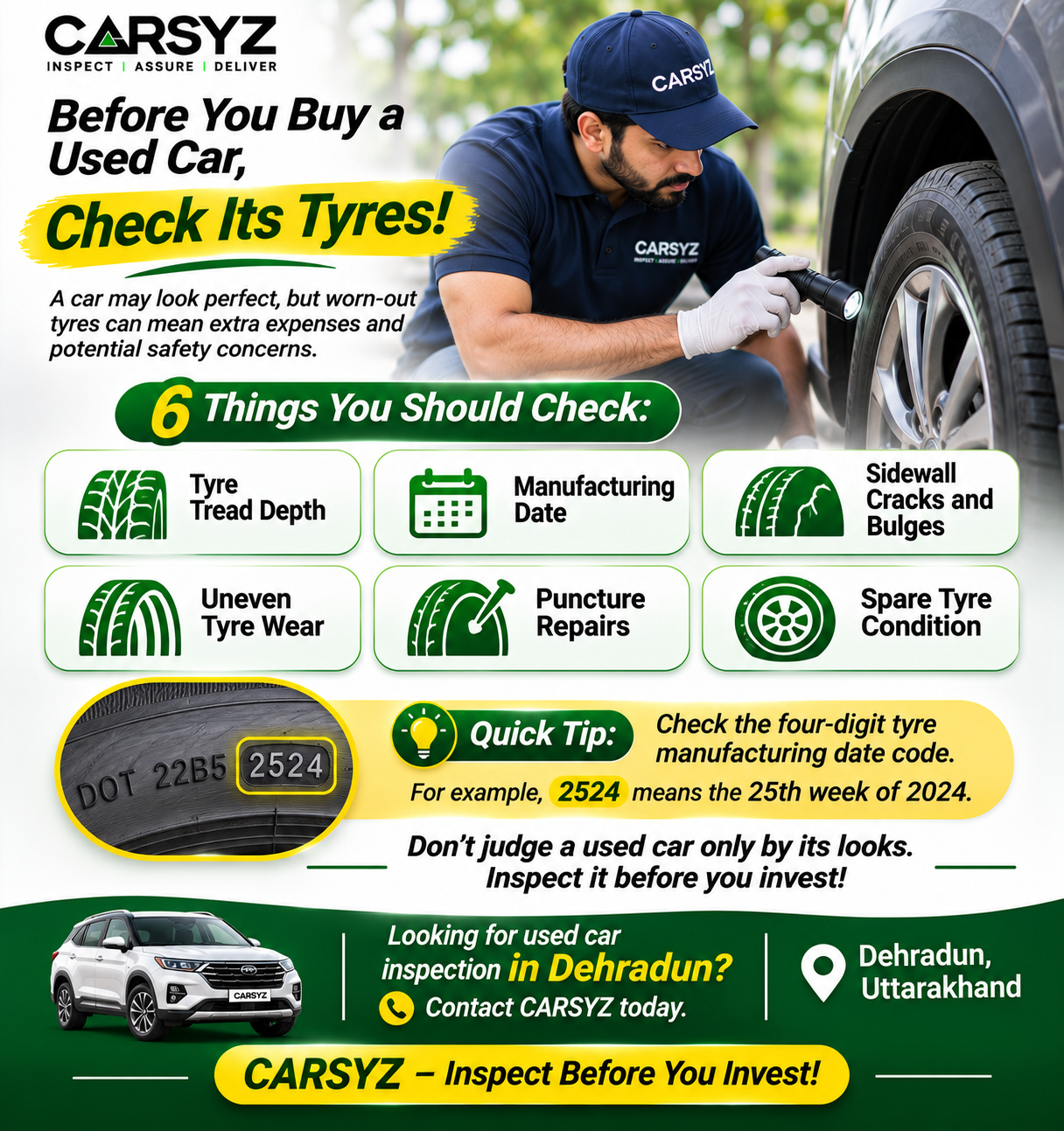
Tyres have a manufacturing date code printed on their sidewall.
Many tyres display a four-digit date code as part of the DOT identification marking.
For example:
2524
This indicates:
- 25 = 25th week
- 24 = Year 2024
Therefore, the tyre was manufactured during the 25th week of 2024.
Why does this matter?
Tyres can age even when a vehicle is not driven frequently. Rubber condition can deteriorate over time due to storage conditions, heat, sunlight and environmental exposure.
Remember, the manufacturing date alone does not determine whether a tyre is safe or unsafe. Inspect its actual condition and follow the tyre manufacturer’s age-related recommendations.
3. Inspect the Tyre Sidewalls
The sidewall is the outer section of a tyre that connects the tread area to the wheel.
Check all visible sidewall areas for:
- Cuts and deep scratches.
- Bulges or bubbles.
- Cracks.
- Exposed cords or fabric.
- Signs of impact damage.
A bulge can indicate internal structural damage and should be treated seriously. A tyre with a visible bulge should not be considered safe simply because its tread looks good.
If you notice significant sidewall damage, get the tyre assessed by a qualified tyre professional.
4. Look for Uneven Tyre Wear
Uneven tyre wear can provide clues about the vehicle’s alignment, suspension or tyre maintenance.
Common patterns include:
Inner-edge wear: The inside edge of the tyre is more worn than the rest of the tread. This may be associated with alignment or suspension-related issues.
Outer-edge wear: The outer edge shows excessive wear. Incorrect alignment, tyre pressure or driving conditions may contribute.
Centre wear: The middle section wears faster than the edges. Overinflation can be one possible cause.
Both-edge wear: Both shoulders appear more worn. Underinflation may contribute to this pattern.
Patchy or uneven wear: Irregular wear patterns may be associated with balancing, suspension, alignment or other mechanical issues.
These patterns are indicators, not definitive diagnoses. A qualified technician should inspect the vehicle to identify the underlying cause.
5. Check All Four Tyres
Never inspect only one tyre.
Check all four tyres and compare:
- Brand and model.
- Size specifications.
- Manufacturing dates.
- Tread depth.
- Wear patterns.
- Visible damage.
Also inspect the spare tyre, if supplied.
Different tyre brands or manufacturing dates do not automatically mean a car has been poorly maintained. However, unusual differences, mismatched sizes or inconsistent wear deserve further investigation.
Always verify that tyre sizes and specifications are suitable for the vehicle.
6. Check for Tyre Repairs
Used cars may have tyres that were repaired after punctures.
Some repairs are acceptable when performed correctly in the repairable area using an appropriate method. However, sidewall damage and certain large or improperly repaired punctures can make a tyre unsafe.
Look for:
- Visible repair plugs or patches.
- Multiple repair locations.
- Damage near the shoulder or sidewall.
- Air leakage.
- Signs of repeated punctures.
If you are unsure about a repair, ask a tyre professional to inspect it.
7. Don’t Ignore the Spare Tyre
Many buyers forget to check the spare tyre during a used-car inspection.
Before finalising the purchase, check:
- Whether the spare tyre is present.
- Its manufacturing date and visible condition.
- Whether it has sufficient tread.
- Whether it matches the vehicle’s approved spare-wheel specifications.
- Whether the jack and wheel-changing tools are available, where applicable.
Some cars come with a temporary spare wheel or a tyre repair kit instead of a full-size spare. Check what the manufacturer originally supplied.
8. Check Whether the Tyres Need Immediate Replacement
Tyre replacement can add a significant expense to your used-car purchase.
Before negotiating the price, consider:
- How many tyres need replacement?
- Are all tyres showing similar wear?
- Is there any sidewall damage?
- Are the tyres of the correct size?
- Is the spare tyre usable?
- Is uneven wear pointing towards another mechanical concern?
Get a replacement estimate from a reliable tyre dealer before making your final buying decision.
9. Why Professional Tyre Inspection Matters
A visual check is useful, but identifying the reasons behind unusual tyre wear may require technical assessment.
A professional vehicle inspection can help assess visible tyre condition, tread wear, sidewall damage and other relevant vehicle components within the inspection scope.
It can also help identify concerns that may need further examination, such as wheel alignment or suspension issues.
If you are purchasing a used car in Dehradun or nearby areas, consider a professional pre-purchase inspection before paying the final amount.
Frequently Asked Questions
1. How do I check the manufacturing date of a car tyre?
Look for the four-digit date code on the tyre sidewall, usually included in the DOT identification marking. The first two digits represent the manufacturing week and the last two represent the year.
2. What is the minimum tyre tread depth?
A commonly recognised minimum tread-depth limit for passenger car tyres is 1.6 mm in many markets. Follow applicable local requirements and the tyre manufacturer’s recommendations.
3. Does an old tyre mean it is unsafe?
Not automatically. Tyre age is one factor. Cracks, bulges, rubber deterioration, storage conditions and actual tyre condition also matter. Follow the manufacturer’s age-related guidance.
4. What causes uneven tyre wear?
Uneven wear may be caused by incorrect tyre pressure, wheel alignment issues, unbalanced wheels, suspension problems or driving conditions.
5. Should I buy a used car with different tyre brands?
Different tyre brands do not automatically make a vehicle unsuitable for purchase. However, verify that the tyres meet the vehicle manufacturer’s specifications and are in good condition.
6. Can worn-out tyres help negotiate a used-car price?
Yes. If tyres require replacement, you can consider the estimated replacement expense while negotiating. Obtain a realistic quote before deciding on the vehicle’s value.
7. Should I check the spare tyre before buying a second-hand car?
Absolutely. Check its availability, condition and compatibility. Also verify whether the car originally came with a full-size spare, temporary spare or repair kit.
Final Thoughts
Tyres are an important part of vehicle safety and maintenance. Before buying a second-hand car, inspect all four tyres, check their manufacturing dates, measure tread depth and look for cracks, bulges, repairs and uneven wear.
A little attention before purchasing can help you avoid unexpected tyre replacement expenses and identify possible maintenance concerns.
CARSYZ – Inspect Before You Invest!
Planning to purchase a used car in Dehradun or nearby areas? Contact CARSYZ to enquire about a professional pre-purchase vehicle inspection before finalising your deal.
